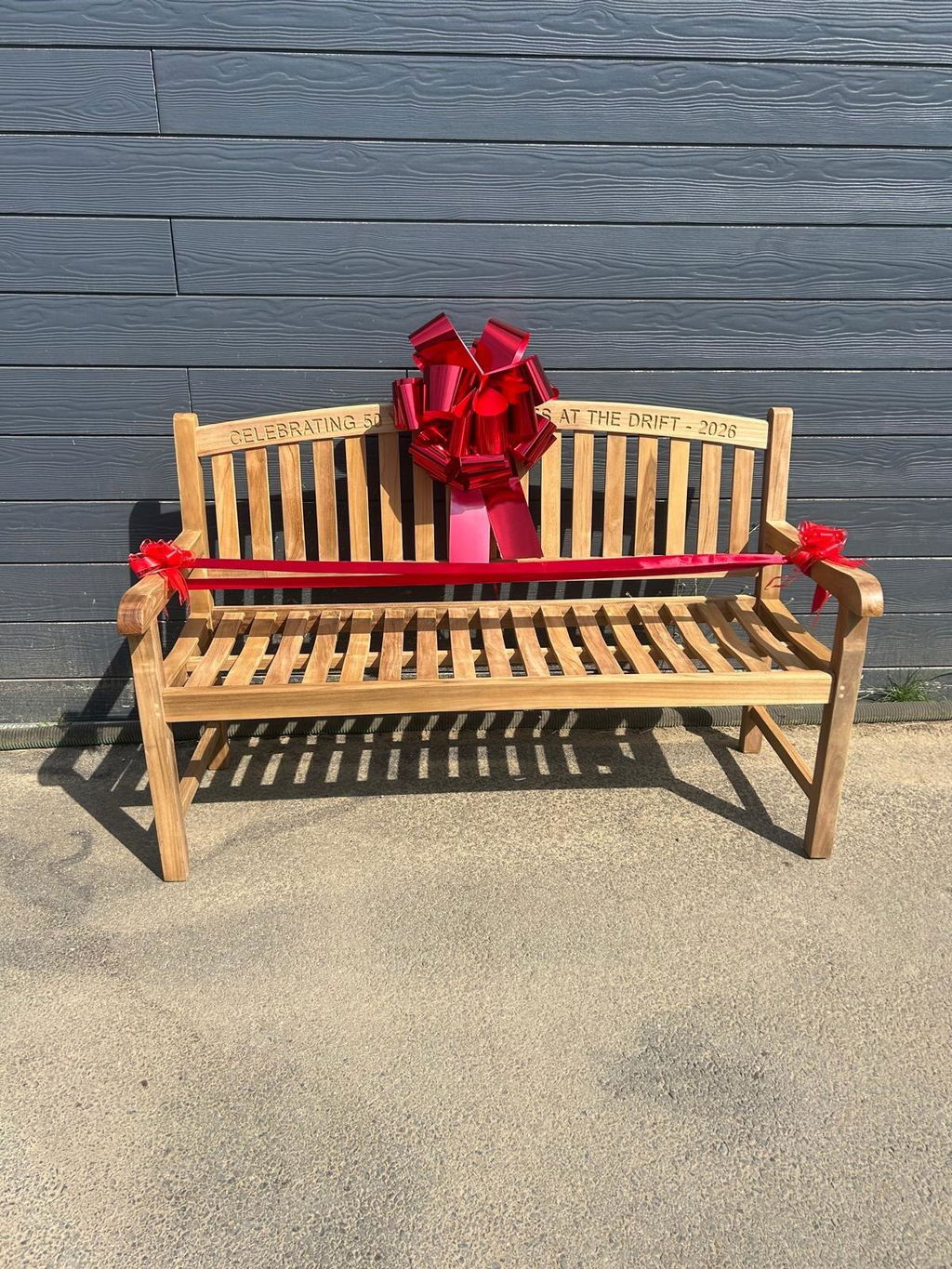
Anyone who has spent an afternoon wandering the walled gardens of a National Trust or English Heritage property will know the look; weathered stone, structured planting and timber furniture that feels as though it has always belonged there. Recreating that atmosphere at home starts with choosing the right materials and few decisions matter more than the wood your garden bench is built from.
Teak is the timber most closely associated with heritage gardens, but it's far from the only hardwood option. Here's how it compares to the alternatives, and why it remains the standard for gardens designed to endure.
Teak
Best for longevity, low maintenance and an authentic heritage look that develops with age.
Teak's natural oils and dense grain make it naturally resistant to rot, insects and weathering without any chemical treatment. Left untreated outdoors, A-grade heartwood teak develops a distinctive silvery-grey patina over several years the same aged, understated look found on benches throughout National Trust and English Heritage properties. It's this combination of near-zero maintenance and a look that only improves with age that has made teak the default choice for heritage gardens for well over a century.
The trade-off is upfront cost; genuine A-grade heartwood teak costs more than most alternatives, reflecting both the maturity of tree required and the more selective milling process.
Oak
Best for a distinctly British material story, particularly for period or listed properties.
English oak has an obvious appeal for gardens with a strong historical or heritage character it's the timber of British barns, ships and furniture for centuries. Oak is genuinely durable and, like teak,weathers to an attractive silvery tone over time.
However, oak is considerably heavier than teak, more prone to movement and cracking as it dries and expands with seasonal moisture, and its high tannin content can stain paving or leave dark streaks when it rains. It also generally requires more maintenance to prevent surface checking (small splits) over time.
Eucalyptus
Best for a lower-cost, faster-growing alternative with a similar look to teak.
Eucalyptus has become popular as a "budget teak" in recent years, offering some natural weather resistance at a lower price point, since it grows far faster than teak and is more widely available. The trade-off is durability; eucalyptus typically lasts a fraction as long outdoors as heartwood teak, and often requires annual oiling to maintain its resistance to the elements an ongoing maintenance commitment that heartwood teak simply doesn't need.
Acacia
Best for an affordable entry point, for those prioritising initial cost over longevity.
Acacia is dense and attractive when new, but it's considerably more moisture-sensitive than teak and prone to splitting if left untreated. Most acacia garden furniture requires regular sealing to survive more than a few UK winters outdoors, making it a higher-maintenance and shorter-lived option than the other hardwoods here.
Softwoods (Pine, Fir)
Best for budget purchases only, not recommended for long-term outdoor use.
Softwoods are sometimes sold as budget garden furniture but without heavy chemical pressure-treatment, they simply aren't built for permanent outdoor exposure in the UK climate. Even treated, softwood benches typically need replacing or heavily restoring within 5–10 years, making them a false economy for anyone hoping for a genuine long-term garden centrepiece.
Why Heritage Properties Overwhelmingly Choose Teak
Walk through the gardens of any major National Trust or English Heritage property and teak is, more often than not, the material underfoot and it's not by accident. These properties need furniture that can survive decades of public use with minimal ongoing maintenance, a budget for restoration work every few years rather than every few seasons, and a material that ages gracefully into the landscape rather than looking tired.
It's the same standard we build to at Wealden Benches. Every bench we make uses A-grade heartwood teak the same standard supplied to National Trust and English Heritage properties built with traditional mortise and tenon joinery for a genuine 25-year structural lifespan. If you're building a garden meant to be enjoyed for decades rather than a few seasons, it's the material worth investing in from the start.